
discover Vinyasa yoga
Discovering Vinyasa Yoga
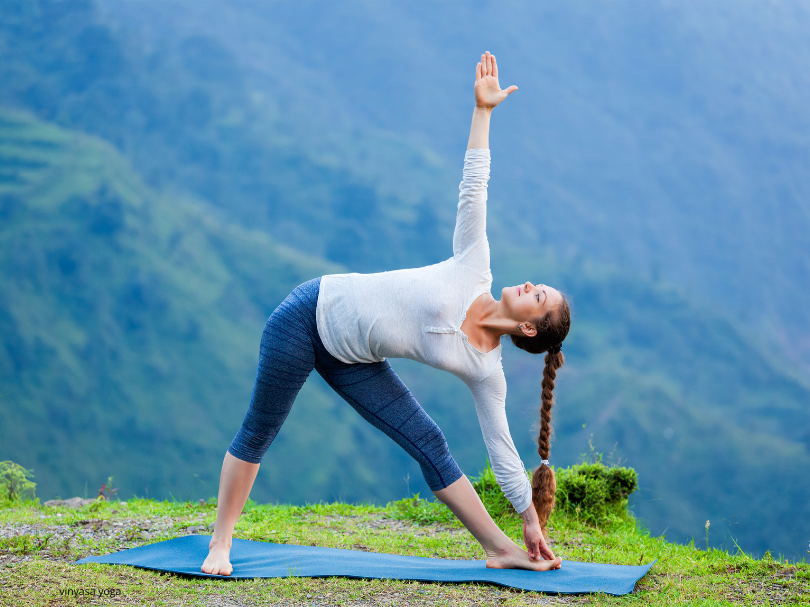
This type of yoga is particularly suitable for people with good physical fitness but who experience great difficulty with concentration. Indeed, the flow of movement creates a meditative state (which is also sought in other types of yoga, but with less movement). The practitioner can only perform what is asked if they are fully present. There is no room for distraction or boredom in a Vinyasa session.
Vinyasa Flow" or simply "Flow Yoga".
The Origins of Vinyasa Yoga
The origin of Vinyasa Yoga dates back to ancient India, where yoga practitioners used fluid movements to connect with their breath and inner energy. However, Vinyasa Yoga as we know it today emerged more recently, in the 1960s and 1970s, thanks to the teachings of Krishnamacharya, considered the "father of modern yoga."
Krishnamacharya taught a style of yoga he called "Vinyasa Krama," which focused on synchronizing movements with the breath. He trained many renowned yoga teachers, such as Pattabhi Jois, who popularized Vinyasa Yoga by teaching around the world. Pattabhi Jois developed his own approach to Vinyasa Yoga, called "Ashtanga Yoga," which focuses on a series of fixed postures and the Ujjayi breath.
Over the years, other yoga teachers have developed their own approach to Vinyasa Yoga, incorporating elements from different yoga styles, such as Hatha Yoga or Iyengar Yoga. Today's Vinyasa Yoga classes can vary considerably, ranging from a very dynamic and physical practice to a softer, more breath-centered practice.
The Course of a Vinyasa Class
A Vinyasa Yoga class generally consists of a warm-up, a series of dynamic postures (or "vinyasa") synchronized with the breath, and a series of ending postures to relax. The postures can vary considerably depending on the class and the level of the practitioners. Vinyasa Yoga classes are usually set to music, which helps create an atmosphere of movement and fluidity.
Vinyasa Yoga is particularly beneficial for strengthening muscles and improving flexibility, but it is also known to help reduce stress and improve concentration. It is often considered a more physical style of yoga than other styles.
It can also be adapted for practitioners of all levels, by modifying postures or using aids such as blocks or straps. It is important to remember that it is crucial to take a class with a qualified teacher to learn the correct techniques and avoid injuries.
In summary, Vinyasa Yoga is a dynamic yoga style characterized by fluid movements synchronized with the breath. It helps strengthen muscles and improve flexibility but can also help reduce stress and improve concentration. It is adaptable to all levels by using modifications or aids.
It is important to take a class with a qualified teacher to learn the correct techniques and avoid injuries.
To compare Vinyasa with other practices, consult our guide to discover all yoga styles and choose the one that suits you best.