
Ujjayi: Victorious Breathing to Harmonize Body and Mind
In the world of yoga, breath plays a central role. Among the various pranayama techniques, Ujjayi, also known as "oceanic breath," stands out for its calming and energizing effect.
This breath, which has its roots in ancient yogic practices, helps to calm the mind while energizing the body. Whether you are a beginner or an advanced practitioner, mastering Ujjayi can transform your yoga practice, while also bringing many benefits to your daily life.
What is Ujjayi?
Ujjayi, which means "victorious breath" in Sanskrit, is a specific breathing technique used in yoga. It is characterized by deep, regular breathing through the nose, where a slight contraction is created in the back of the throat. This contraction produces a soft, soothing sound, often compared to the sound of ocean waves, hence the nickname "oceanic breath."
By practicing Ujjayi, we strengthen the connection between breath and movement, thus creating fluidity in yoga practice. It is a technique often used in dynamic yoga styles, such as Vinyasa or Ashtanga, to maintain constant breathing despite physical exertion.
The benefits of Ujjayi breath
Ujjayi breath offers a multitude of benefits, both physically and mentally.
- Nervous system regulation: By slowing down and controlling breathing, Ujjayi helps calm the nervous system, thereby reducing stress and anxiety. It is a true invitation to re-center oneself and return to the present moment.
- Improved concentration and endurance: By synchronizing breath with movement, Ujjayi helps improve concentration and increase endurance. This rhythmic breathing acts like an internal metronome, allowing you to stay grounded in your practice while avoiding distraction.
- Optimizing oxygen supply: The depth of Ujjayi breathing allows for better oxygenation of the body, which improves blood circulation and provides energy to the muscles.
- Stimulation of internal heat and detoxification: By accentuating breathing, Ujjayi generates internal heat, thus helping to detoxify the body through perspiration. This heat also promotes muscle flexibility, allowing for better flexibility in postures.
How to practice Ujjayi?
The practice of Ujjayi may seem complex at first, but with a little patience and perseverance, it quickly becomes second nature. Here's how to master it:
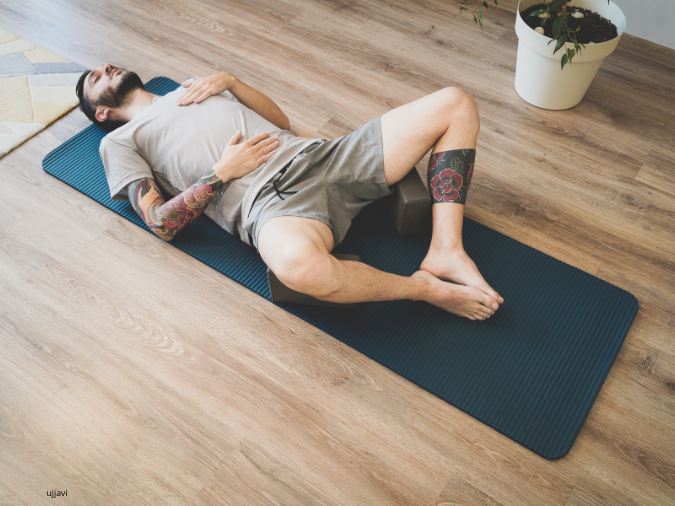
- Posture: Sit comfortably in a meditation position (or lie down if it's more comfortable). Make sure your spine is straight to facilitate breathing.
- Inhale: Inhale slowly through your nose, filling your lungs smoothly. Focus on the sensation of air entering your body.
- Throat constriction: As you exhale, slightly constrict the back of your throat, as if you wanted to exhale while whispering. This will produce a soft sound, similar to that of waves. This constriction should be light and controlled, without forcing.
- Exhale: Always exhale through your nose, maintaining this slight constriction. Exhalation should be as long and smooth as inhalation.
- Repeat: Continue this breathing cycle, focusing on the sound and regularity of your breath. Try to maintain this rhythm throughout your yoga practice.
Tips for beginners: It is normal to find it difficult at first. Start with a few minutes a day and gradually increase your practice time. The key is to remain relaxed and not force your breathing.
Ujjayi in different yoga styles
Ujjayi is particularly popular in dynamic yoga practices like Vinyasa and Ashtanga. In these styles, each movement is linked to a breath. Ujjayi helps maintain a regular rhythm and create fluidity in the transition between postures.
- Vinyasa : In this style, Ujjayi is used to synchronize breath and movement, thus creating a fluid and dynamic sequence.
- Ashtanga: Ujjayi plays an essential role in Ashtanga, where each movement is guided by the breath. Regular practice of Ujjayi in Ashtanga helps to build endurance and purify the body through the heat generated.
- Hatha Yoga: Even in gentler practices like Hatha, Ujjayi can be used to promote deep and conscious breathing, thus bringing calm and concentration.
Integrating Ujjayi into your daily life
The beauty of Ujjayi is that it's not limited to the yoga mat. You can integrate this breathing technique at any time of the day to calm your mind or re-center yourself.
- At work: If you feel stressed or overwhelmed by tasks, take a few minutes to practice Ujjayi. It will help you regain your calm and concentration.
- In the morning: Starting the day with a few minutes of Ujjayi breathing can help you mentally and physically prepare for the day ahead. It's an excellent way to start the day with a calm energy.
- Short exercises: If you have little time, even a cycle of 10 Ujjayi breaths can bring significant benefits. Take these small moments to reconnect with yourself.
Conclusion
Ujjayi, much more than a simple breathing technique, is a powerful tool for harmonizing the body and mind. By integrating this oceanic breath into your yoga practice and your daily life, you will discover profound benefits, both physically and mentally.
So take a deep breath, slightly constrict your throat, and let the waves of Ujjayi bring you calm, energy, and clarity.
To go even further in your breath practice, explore Kapalabhati, another powerful technique for purifying the body, or discover the different pranayama techniques in our complete guide to breathing in yoga.