

Zazen Meditation: The Path to Zen and Inner Harmony
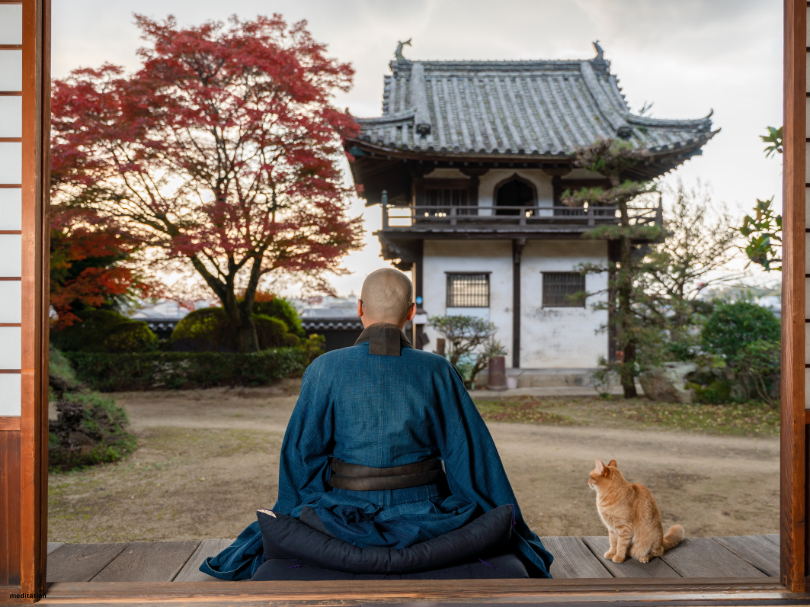
What is Zen?
The word "Zen" evokes serenity, calm, and a way of living in harmony with oneself and with the world. "Zen" is a Japanese term, derived from the Sanskrit word "dhyâna," which means "meditation." Zen represents a philosophy inspired by Buddhism, emphasizing personal experience, simplicity, and mindfulness of the present moment.
Zazen meditation ("za" for "seated" and "zen" for "meditation") is one of the main practices of Zen philosophy. It is a form of seated meditation that, through its simplicity and depth, aims to reconnect us to our inner being.
What is Zazen meditation?
Zazen meditation is distinguished by its rigorous posture and the particular attention paid to breathing and mental stability. Unlike other forms of meditation, it does not rely on visualization or a mantra. The goal is to let thoughts flow without following them, to experience the present moment without judgment, and to calm the mind to reconnect with inner silence.
How to practice zazen: The technique in detail
To begin zazen well, it is essential to follow the key steps of this practice.
Preparing the space: Choose a quiet place where you will not be disturbed. Traditionally, a meditation cushion (zafu) is used to adopt a comfortable and stable posture.
The posture:
- Sit cross-legged or in half-lotus, keeping your back straight but relaxed.
- Place your hands in "cosmic mudra": the right hand is placed under the left hand, thumbs lightly touching.
- Your chin is slightly tilted downwards, and your gaze is fixed about a meter in front of you.
Breathing: Breathing in zazen is natural and deep, often centered on exhalation. The breath becomes an anchor to calm the mind and observe what is happening inside, without judgment.
State of mind: It's about simply "being." In zazen, thoughts appear and disappear naturally. There is no need to chase them away, but not to hold on to them or attach to them. Observe them like clouds in the sky, passing without disturbing the inner calm.
The benefits of zazen meditation
- Stress and anxiety reduction: By cultivating mental calm, zazen allows us to observe our emotions without reacting to them.
- Mental clarity and concentration: Over time, zazen practice improves concentration and strengthens attention.
- Emotional balance: By promoting better emotional management, zazen helps to regain a calm and balanced state of mind.
- Anchoring in the present: This meditation constantly brings us back to the present moment, helping us to cultivate patience and acceptance.
- Connection to self: By observing without judgment, we develop better self-knowledge.
Tips for regular zazen practice
- Start gradually: At first, try meditating 5 to 10 minutes a day, then gradually increase the duration to 20-30 minutes.
- Practice at the same time: Establish a routine, preferably in the morning or early evening.
- Avoid distractions: Turn off your phone and put your environment in "pause" mode.
- Be kind to yourself: Zazen meditation can be difficult at first. The essential thing is to practice with patience and kindness.
- Meditate in a group: If possible, join a group or a meditation dojo.
Conclusion: Zen at the heart of our lives
Practicing zazen meditation means opening ourselves to a more harmonious and peaceful life, by anchoring ourselves in the present moment. This approach helps us let go of worries, find our inner calm, and better understand our own nature.
Whether it's to cultivate serenity or to reconnect with oneself, zazen is a valuable method. So, why not try and experience this ancient practice?