
Triangle Pose in Yoga: Utthita Trikonasana, a Journey to Balance
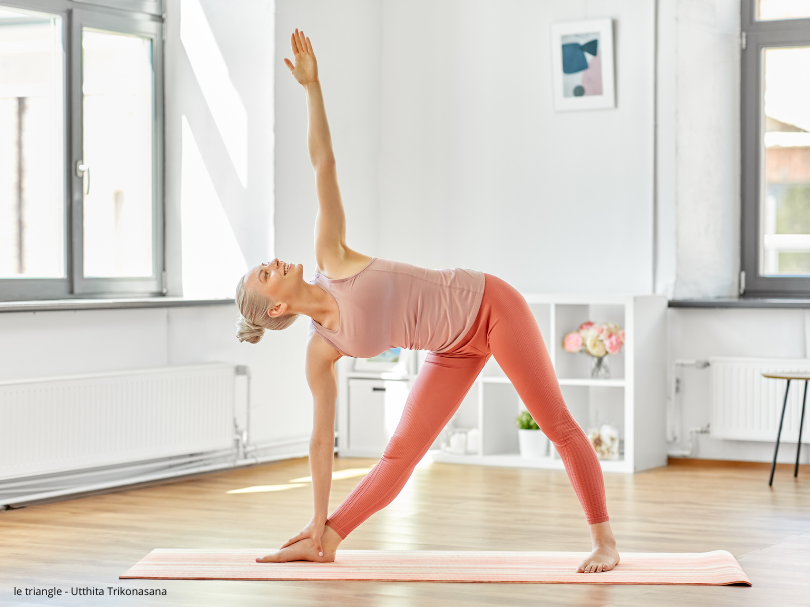
Yoga is much more than a simple physical practice: it is a discipline that unites the body, mind, and soul. Among the many postures that make up yoga, some stand out for their ability to harmonize these three aspects of our being. This is the case with Triangle Pose, or Utthita Trikonasana, an emblematic position that combines strength, flexibility, and concentration. In this article, we will delve deeply into this posture to understand its importance, its benefits, and how to master it in daily practice.
What is Triangle Pose (Utthita Trikonasana)?
Triangle Pose gets its name from the Sanskrit word Trikona, which means "triangle." The term Utthita means "extended" or "stretched," describing the extension of the limbs and spine in this posture. Together, Utthita Trikonasana refers to the Extended Triangle Pose, where the body forms straight lines that create a triangle shape.
The triangle also symbolizes stability, balance, and a strong foundation in many spiritual traditions. In yoga, this posture embodies these qualities while opening the body to deep stretches and strengthening the stabilizing muscles. Although it appears simple, Utthita Trikonasana requires careful attention to body alignment to reap its full benefits.
The Benefits of Triangle Pose (Utthita Trikonasana)
Utthita Trikonasana is a versatile posture that offers benefits on several levels. Whether you are a beginner or an advanced practitioner, you can incorporate this posture into your routine to improve your physical, mental, and energetic health.
1. Physical Benefits
- Improved Flexibility: Utthita Trikonasana is particularly effective for stretching the hamstrings, hips, and spine. With regular practice, this posture can increase the flexibility of the posterior and lateral muscles of the body, while improving hip and shoulder mobility.
- Muscle Strengthening: In addition to stretching the muscles, Extended Triangle Pose also engages the quadriceps, abdominal muscles, and back muscles. Maintaining this position requires strength to stabilize the legs and torso, which tones the leg and lower back muscles.
- Improved Posture: By encouraging correct body alignment, Utthita Trikonasana helps to correct posture. People who spend long hours sitting or hunched over can benefit from this stretch, which counteracts the effects of poor posture.
- Stimulation of Internal Organs: The stretching of the torso in this posture helps to stimulate the digestive organs, thereby improving digestion and promoting better blood circulation in this region.
2. Mental Benefits
- Concentration and Mental Clarity: Due to the balance required in this posture, Utthita Trikonasana helps improve concentration. Maintaining balance while breathing deeply helps to calm the mind and develop mental clarity.
- Stress Reduction: Like many yoga postures, Extended Triangle Pose helps release accumulated tension in the body, particularly in the shoulders and neck. This physical release reverberates through the mind, helping to reduce stress and anxiety.
3. Energetic Benefits
- Energy Flow: By opening the chest and stretching the sides of the body, Utthita Trikonasana allows for better circulation of energy, or prana, in the body.
- Chakra Balancing: According to yogic tradition, Utthita Trikonasana helps to balance several chakras, notably the root chakra (Muladhara) and the solar plexus chakra (Manipura), which are associated with stability and self-confidence.
How to Perform Triangle Pose (Utthita Trikonasana)
Extended Triangle Pose may seem simple at first glance, but it requires careful attention to alignment to maximize its benefits. Here is a step-by-step guide to correctly executing Utthita Trikonasana.
Step-by-Step:
-
Starting Position:
- Stand with your feet together, arms at your sides.
- Inhale deeply, then spread your feet 1 to 1.5 meters apart, depending on your height and flexibility.
-
Foot Position:
- Turn your right foot 90 degrees outward, so your toes point forward.
- Your left foot remains slightly turned inward, about 15 degrees, to maintain balance.
- Make sure the heel of your right foot is aligned with the arch of your left foot.
-
Arm Placement:
- Extend your arms horizontally, parallel to the ground, palms facing down. Your arms should be aligned with your shoulders.
-
Bend:
- As you exhale, slowly bend to the right while keeping your hips open. The movement should come from the hips, not the waist.
- Place your right hand on your ankle, shin, or the floor, depending on your flexibility. Make sure your torso remains open and you don't hunch forward.
-
Extension:
- Lift your left arm towards the sky, in a straight line with your right arm. Gaze towards your left hand if your neck allows, otherwise keep your head in a neutral position.
-
Breathing:
- Maintain the position while breathing deeply. Try to stay in this posture for 30 seconds to 1 minute.
- To exit the posture, inhale and slowly straighten up, returning to the starting position.
Tips for Beginners:
- Use of Props: If you find it difficult to reach the floor, use a yoga block under your hand to help you maintain balance and correct alignment.
- Monitor Your Alignment: Focus on opening your hips and avoid letting your torso collapse forward.
Common Mistakes to Avoid:
- Closed Hips: Don't let your upper hip rotate forward; keep both hips wide open.
- Rounding the Back: Avoid bending by rounding your back. Keep your spine lengthened and straight.
- Forcing the Stretch: Don't try to reach the floor at all costs. The goal is to maintain good alignment, even if it means placing your hand on your shin or a block.
Variations of Triangle Pose (Utthita Trikonasana)
1. Revolved Triangle (Parivritta Trikonasana)
Revolved Triangle, or Parivritta Trikonasana, is an advanced variation that involves a twist of the body. Unlike the classic posture, in Revolved Triangle, you twist your torso to place the hand opposite the front leg on the floor or on a block.
- Improved Digestion: The twist in this posture helps massage the abdominal organs, thus improving digestion.
- Spinal Strengthening: This posture helps to strengthen and lengthen the spine, particularly in the lumbar region.
2. Triangle with Props
The use of props, such as yoga blocks or straps, can make Utthita Trikonasana more accessible to beginners or practitioners with physical limitations.
Precautions and Contraindications
1. Back or Hip Problems: If you suffer from chronic lower back pain or a hip injury, be cautious. Start with props to support the body.
2. High Blood Pressure: Avoid turning your head upwards in this posture. Keep your head in a neutral position.
3. Neck Problems: If you have neck pain, keep your head aligned with your torso, looking straight ahead.
4. Pregnancy: Utthita Trikonasana can be practiced during pregnancy, but use props to support the body.
Conclusion
Extended Triangle Pose, or Utthita Trikonasana, is much more than a simple stretch: it is an invitation to balance, inner strength, and mental and physical flexibility. By integrating this posture into your daily practice, you can progressively improve your posture, strengthen your body, and calm your mind.
This emblematic yoga posture reminds you of the importance of alignment in all aspects of life. Whether on the mat or off, Utthita Trikonasana helps you find the perfect balance between strength and flexibility, between concentration and letting go.
So, the next time you unroll your yoga mat, don't hesitate to include Utthita Trikonasana in your practice. Remember that the key to this posture lies in regularity, patience, and listening to your body. Practice with intention and you will discover all the benefits this posture can bring you.
To discover other fundamental yoga postures and build a solid practice, explore our complete guide to essential asanas.